
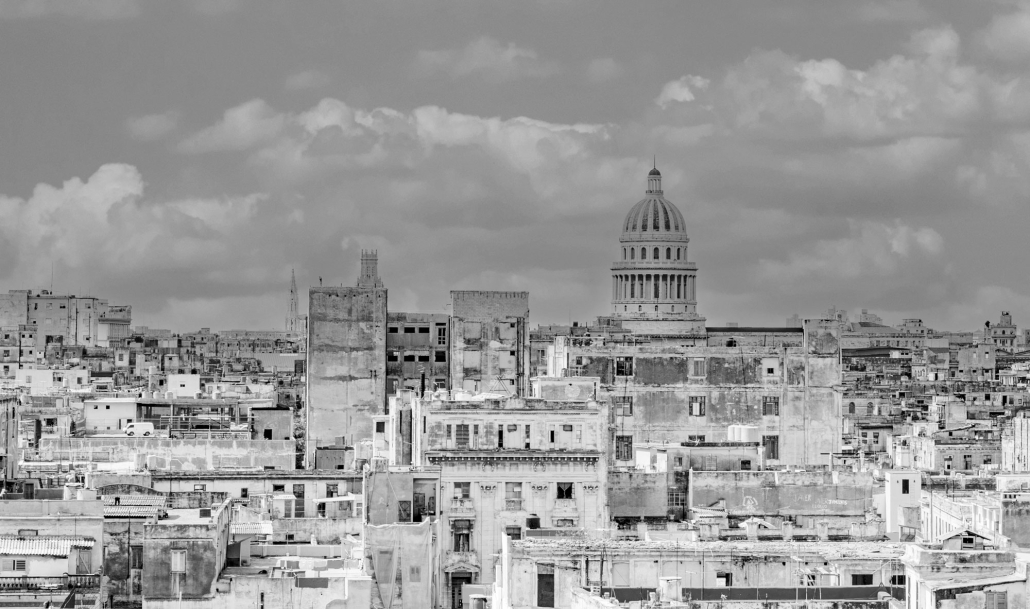
Havoc in Havana
One of the places I’m happiest to have visited – twice – is Cuba. From a purely visual standpoint, I sometimes think spending at least a week in Havana should be mandatory for any serious photographer.
Few cities I have visited reward serendipitous wandering quite the same way. You can turn a corner expecting nothing and suddenly find a scene that feels less like reality and more like a film set that forgot to wrap decades ago.
I remain in awe of the city and its strange magnetism. Havana is undeniably beautiful, though obviously not in the polished or carefully curated sense. Its appeal often lives in the cracks. Buildings seem to peel and sag under the weight of time and rule.
Balconies lean with an almost philosophical indifference to gravity. The city wears its scars openly. There is decay, yes, but also dignity and character among people trying to live their lives within that decay. It rarely felt staged or manufactured for visitors. It simply existed on its own terms – take it or leave it.
What stayed with me as much as the visuals, though, were the people. During both visits I met Cubans whose warmth and openness felt spontaneous rather than transactional. Conversations had a way of appearing out of nowhere – on street corners, in cafés, outside homes, beside old American cars held together by equal parts ingenuity and stubbornness. And probably a few smuggled Japanese spare parts.
Like with all places where I’ve spent some time, I find myself thinking about the people there now.
Cuba is going through extraordinarily difficult times.
Many ordinary Cubans seem caught between forces largely outside their control – economic hardship, shortages, political realities and circumstances that leave little room to maneuver. Sandwiched between a rock and a hard place hardly begins to cover it.
Perhaps that is also why the place stays with me. Cuba was never simply about old cars and faded facades. It was, and is, about the people living behind them and the hopes and dreams they carry. Despite the havoc. Or, maybe their dreams have never been more important.

